How to Make Flash USDT with a Reliable Working Method for Instant Token Creation
· based on the channel Rca FastPrint
Flash USDT represents a method to create an instant, flash-minted version of the USDT cryptocurrency token, leveraging Ethereum's ERC20 token standard and smart contract technology. This approach allows users to generate tokens quickly within a controlled development environment, primarily for testing, educational, or development purposes.
Understanding Flash USDT and Its Purpose
Flash USDT is essentially an ERC20 token clone that mimics the USDT stablecoin's functionality but is created instantly via a smart contract. It is not official USDT but a flash-generated token useful for developers and testers to simulate transactions or understand token mechanics without using real funds. The concept revolves around deploying a smart contract that defines the token's parameters and then interacting with it through wallet software.
Setting Up ChainIDE for Smart Contract Development
ChainIDE is a web-based integrated development environment designed for blockchain and smart contract creation. To begin creating Flash USDT:
- Access the ChainIDE platform through the provided link ChainIDE Script for creation.
- Load the Solidity smart contract script that defines the Flash USDT token.
- Compile the contract, checking for errors and ensuring the token parameters such as name, symbol (USDT), and total supply are set correctly.
This setup prepares the contract for deployment on the Ethereum network or a test network, enabling instant token creation.
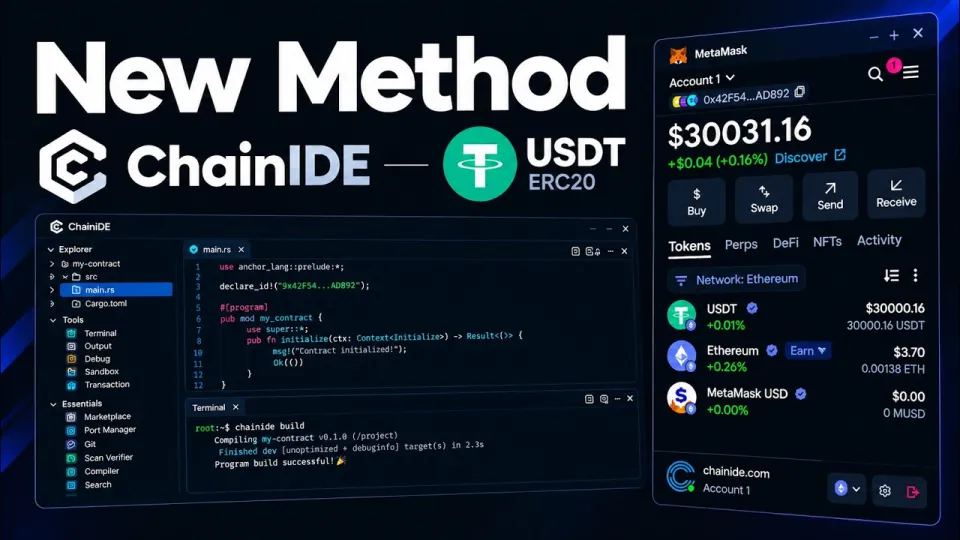
Video: How to Make Flash USDT | Working Method 2026
Connecting MetaMask and Interacting with the Token
MetaMask is a browser wallet extension that manages Ethereum-based assets and interacts with smart contracts. After deploying the Flash USDT contract:
- Connect your MetaMask wallet to the Ethereum network or the test network used.
- Import the deployed contract address into MetaMask to view and manage Flash USDT tokens.
- Use MetaMask to send, receive, and test transactions with the flash-created tokens.
This interaction demonstrates how flash USDT tokens behave in a real wallet environment.
Key Components of the ERC20 Flash USDT Token Structure
The Flash USDT contract follows the ERC20 token standard, which includes:
- Name and Symbol: Identifies the token as Flash USDT.
- Total Supply: Defines the maximum tokens created instantly.
- Balance Management: Tracks user token balances.
- Transfer Functions: Enables sending tokens between addresses.
- Allowance and Approval: Allows third parties to spend tokens on behalf of the owner.
Understanding these components is crucial for modifying or auditing the contract.
Testing, Verification, and Safety Measures
Before interacting with any smart contract, especially one generating tokens instantly:
- Thoroughly review the contract's source code for potential vulnerabilities.
- Deploy and test on Ethereum test networks (e.g., Ropsten, Goerli) to avoid losing real funds.
- Verify contract addresses and network configurations within MetaMask.
- Avoid sending real cryptocurrency to unknown or unverified contracts.
These steps protect users from scams and unintended losses.
Common Mistakes When Creating Flash USDT
- Using incorrect contract addresses in wallet software.
- Deploying contracts without compiling or testing properly.
- Sending real funds to unverified contracts or during the testing phase.
- Overlooking network settings within MetaMask, causing failed transactions.
Paying attention to these common errors improves the success rate of creating and using Flash USDT tokens.
Useful Links
- Flash USDT Creation Script and Guide — Official resource for the ChainIDE script and detailed instructions.
Summary
Creating Flash USDT tokens involves deploying an ERC20 smart contract using ChainIDE and interacting with it via MetaMask. This process offers a practical, hands-on method for developers and enthusiasts to experiment with token creation, smart contract interaction, and wallet integration without risking real assets. Always prioritize contract verification and testing on test networks to ensure security. For a comprehensive walkthrough and the latest updates, refer to the original detailed guide by the Rca FastPrint channel and their linked resources.
Key takeaways
- Flash USDT is an ERC20 token created via smart contracts on Ethereum.
- ChainIDE and MetaMask are key tools for developing and interacting with Flash USDT.
- The method involves deploying a smart contract and linking it to a wallet interface.
- Testing and verifying smart contracts before use is essential to avoid risks.
- The process is educational and intended for development and testing purposes only.
Questions & answers
What is Flash USDT and how does it differ from regular USDT?
Flash USDT is an instantly created ERC20 token that mimics USDT for development and testing purposes. Unlike regular USDT, it is not backed by real assets and exists only within the smart contract environment for educational or experimental use.
Which tools are required to create Flash USDT tokens?
The primary tools are ChainIDE, a blockchain development environment for writing and deploying smart contracts, and MetaMask, a wallet extension to interact with Ethereum-based tokens and contracts.
Is it safe to use Flash USDT tokens for real transactions?
No, Flash USDT tokens are intended for testing and educational use only. They are not backed by real funds and should not be used for actual financial transactions or sent to unknown contracts without thorough verification.
How can I verify the smart contract before deploying Flash USDT?
You should review the source code carefully, test deployments on Ethereum test networks, and confirm the contract address and network settings in your wallet. Avoid deploying or interacting with unverified contracts to prevent security risks.
Source: How to Make Flash USDT | Working Method 2026 · Markdown version